Article
How to Read Effectively with AI: 5 Practical Methods
Published
Use AI to choose books, ask better questions, test your understanding, and put ideas into practice without outsourcing your thinking.
- Set a purpose. Are you looking up a fact, exploring an argument, or building a skill? Each goal calls for a different reading approach.
- Use AI for orientation, not to make every choice. Ask for a map of topics, comparisons, or counterarguments, then choose what deserves your time.
- Write your question before asking AI. Note what you know, what you assume, and what is uncertain. A question that already contains a verdict can lead you astray.
- Read a passage, close the screen, and explain it yourself. If you cannot show why the argument works, return to the text and use AI only to clarify the sticking point.
- Test one idea in life. Record what you learned, try it, get feedback, and revise. Pages completed are not the only measure of learning.
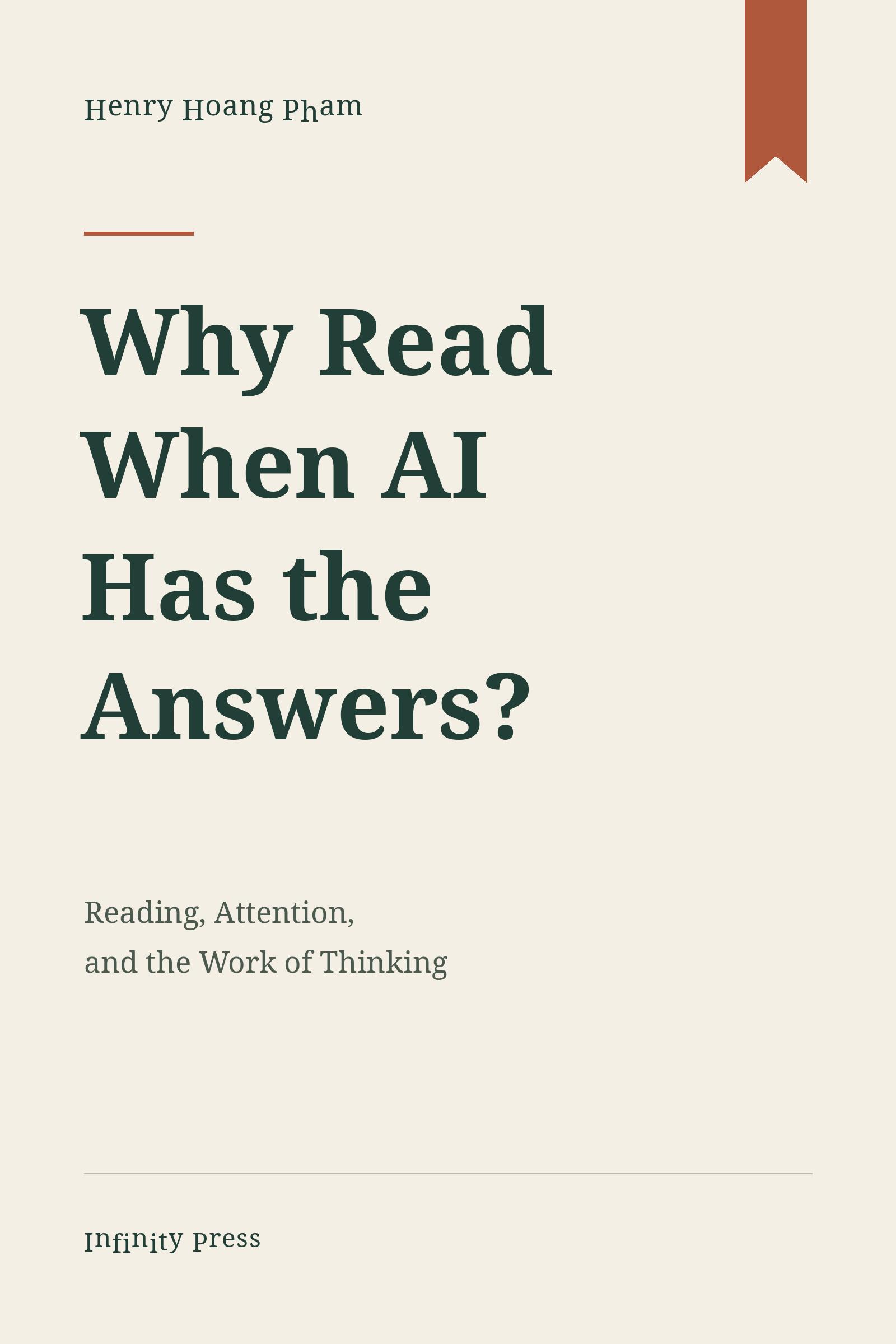
The goal is not to minimize AI use. If an explanation helps you return to the book with clearer understanding, the tool has done useful work. But if you move from one answer to the next without thinking or acting, your information intake can grow while your learning stalls. Leave a small pause between receiving an answer and believing it. That is also the spirit of Why Read When AI Has the Answers? by Henry Hoang Pham.